
Ask a Preschool Teacher: Top 5 Questions Parents Are Afraid to Ask
Read More


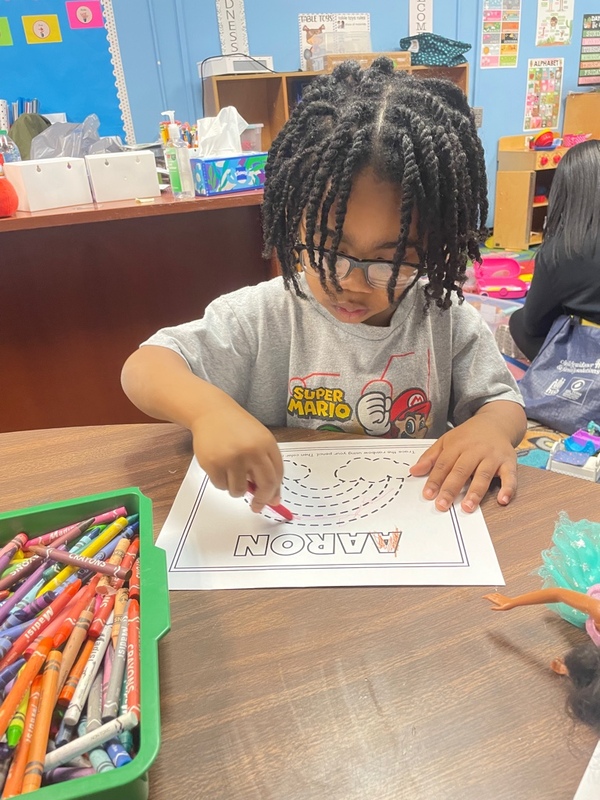
Choosing a preschool is a big decision.
And let’s be honest, parents have questions they don’t always feel comfortable asking. You're not just picking a program, you're choosing the environment where your child will grow, build confidence, and begin their educational journey.
And while parents often ask about tuition, hours, and curriculum… there are deeper questions that don’t always get said out loud.
Let’s talk about them!
This is the question almost every parent wonders. Here’s the truth: children develop at different rates. Growth in early childhood is not linear — it happens in bursts.
At preschool, we’re not just looking at whether a child can write their name or count to 20. We’re looking at:
Readiness is about growth, not comparison. If there are skill gaps, preschool is exactly where those skills are strengthened gently, intentionally, and consistently.
Parents are often surprised to hear that this is completely normal. School is a structured social environment. Children are learning to:
That takes practice.
Sometimes children are more independent at school. Sometimes they test boundaries more. Either way, preschool is where they learn the skills that make elementary school smoother. Different behavior doesn’t mean something is wrong, it often means growth is happening.
Short answer: yes.
Long answer: play is how the brain develops in early childhood.
When children build with blocks, they’re learning spatial awareness and early math.
When they role-play in dramatic play, they’re developing vocabulary and social negotiation skills.
When they paint, cut, and glue, they’re strengthening fine motor skills needed for writing.
Intentional play builds:
Play is not the opposite of learning. It is the vehicle for learning.
Preschool is where children learn emotional regulation.
They are not born knowing how to manage frustration, disappointment, or excitement. Those skills are taught and modeled.
In a quality preschool environment, teachers:
Behavior challenges are not red flags, they are opportunities for skill building.
The goal isn’t perfection. The goal is progress.
This is the most important question.
When you walk into a preschool, you should see:
You should feel confident that learning is happening, not just supervision.
The right preschool partnership should feel like alignment: shared values, shared goals, and open communication.
Preschool is not just about preparing for kindergarten.
It’s about building confidence.
It’s about developing independence.
It’s about teaching children how to learn.
When families and educators work together, children thrive.
If you’re considering preschool for your child, we invite you to visit, ask questions, and see learning in action.
At EELA, we partner with families. Ask the questions. Visit the classrooms. See the difference.
#EELAFamily #ConfidentParents #PreschoolExperts


